Advanced treatments
TMS — Transcranial Magnetic Stimulation
Non-invasive brain stimulation for depression and OCD. No medication, no anesthesia, no recovery time. Many people drive themselves home and go back to work.
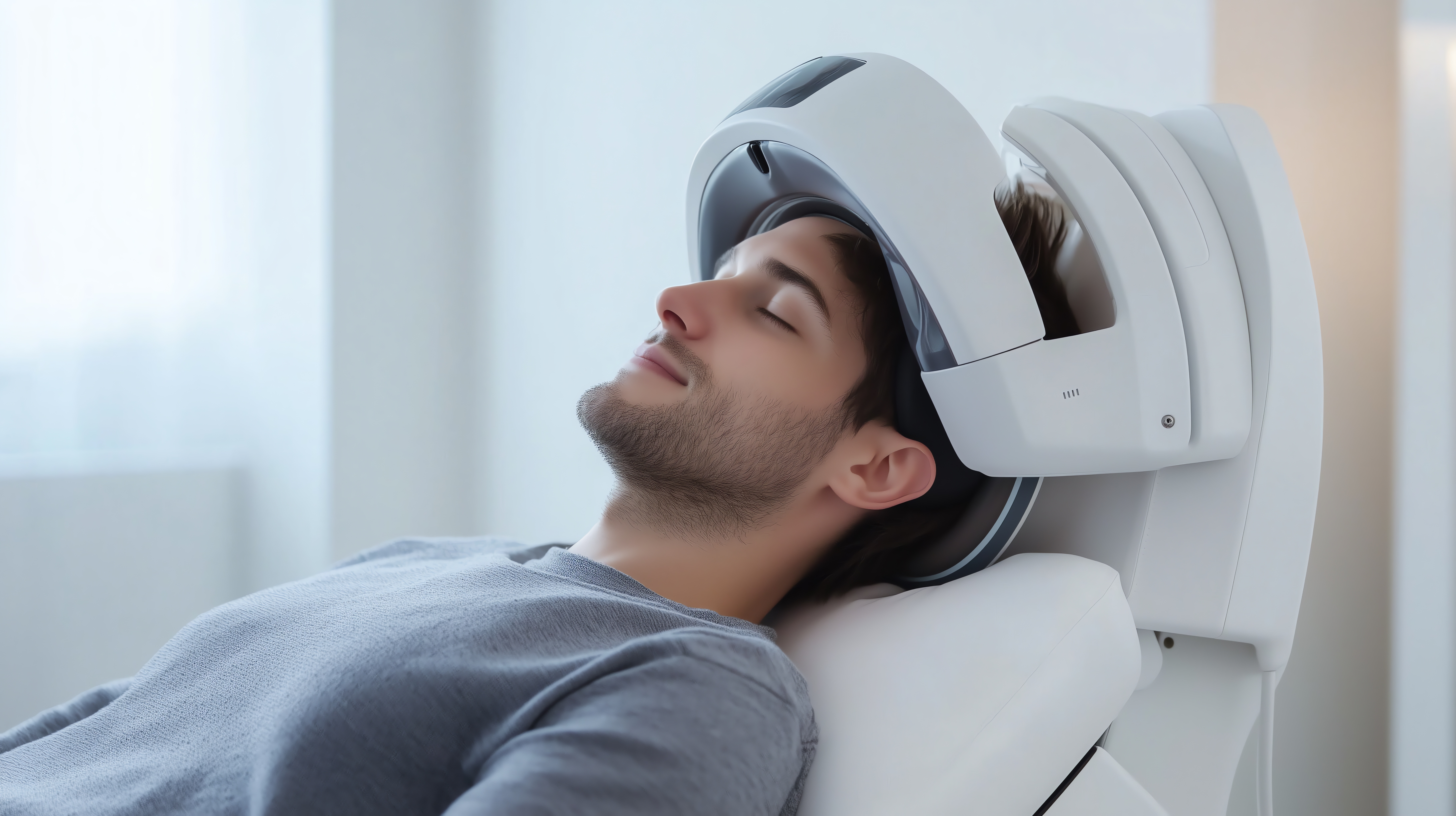
What TMS is
TMS uses focused magnetic pulses — the same kind of energy used in MRI machines — to gently activate brain regions involved in mood. It’s been FDA-cleared for depression since 2008 and has approvals for treatment-resistant depression, anxious depression, and OCD.
What surprises most people: there’s no medication, no IV, no anesthesia. You sit in a comfortable chair, the device is positioned against your scalp, and over about 20 minutes you’ll feel a tapping sensation while the device delivers pulses. Then you go home or back to work.
What the schedule looks like
Evaluation
Your clinician confirms TMS is a good fit. Most people who try TMS have already tried two or more antidepressants without enough relief.
The first session
Includes a brief mapping process to find the right intensity for you specifically. About an hour total for that first visit.
The full course
36 sessions over 6–9 weeks. Daily Monday through Friday. Each treatment runs 3–20 minutes depending on the type of TMS.
Tracking your progress
We use brief check-ins (the same questionnaires research uses) so both of us can see whether it’s working. Most people who respond start to notice changes by the third or fourth week.
Maintenance if needed
If you respond and later relapse, a brief booster course every 6–12 months is typically all that’s needed.
How well does it work?
In the published research, 50–60% of people with treatment-resistant depression respond to TMS, and 30–40% reach full remission. The evidence base is mature — over 60 randomized trials at this point.
What it actually feels like
The most common sensation is a tapping or knocking on your scalp. Some people find it mildly uncomfortable for the first few sessions and unremarkable after that. You’ll be awake the whole time. You can read, listen to music, or have a conversation. After the session, you can drive yourself home.
Side effects to know about
- Scalp tenderness at the treatment area, especially in the first week.
- Mild headache, which usually goes away in the first week or two.
- Seizure risk is very rare (estimated less than 1 in 30,000 sessions in modern protocols) but not zero.
- No effects on weight, sex, energy, or stomach — TMS doesn’t affect the rest of the body the way oral medications can.
Insurance and cost
Most major commercial plans cover TMS when there’s documented treatment resistance. We handle prior authorization. Your cost depends on your plan and your deductible status; we’ll give you a clear written estimate before you start.